

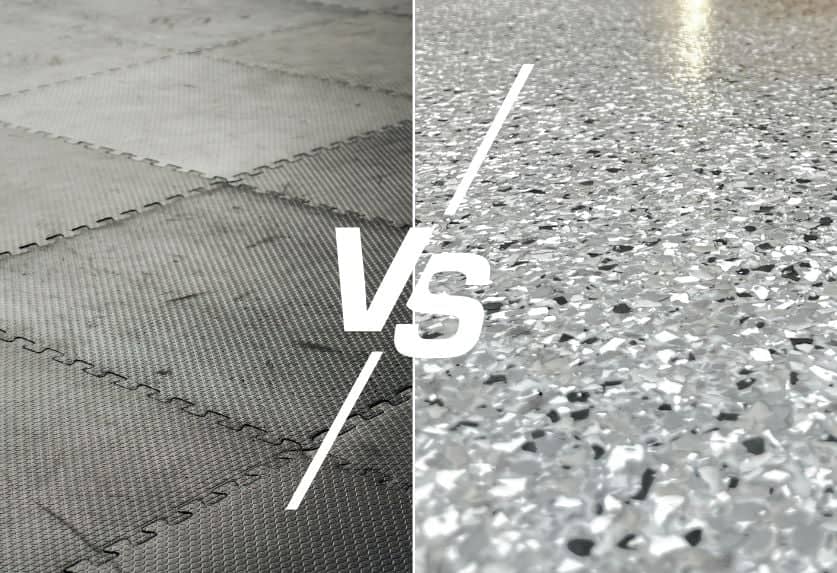
If you’re upgrading your garage floor, you’ve probably narrowed it down to two popular options: snap-together garage floor tiles or a professionally installed epoxy coating. Both beat bare, stained concrete, and both can look great. But they’re very different products that solve the problem in very different ways, and the right choice depends on how you actually use your garage.
We install epoxy floors for a living, so we’ll be upfront about that. We’ll also be fair, because tiles genuinely make sense for some people, and you deserve a straight comparison rather than a sales pitch. Here’s how the two stack up.
What Are Garage Floor Tiles?
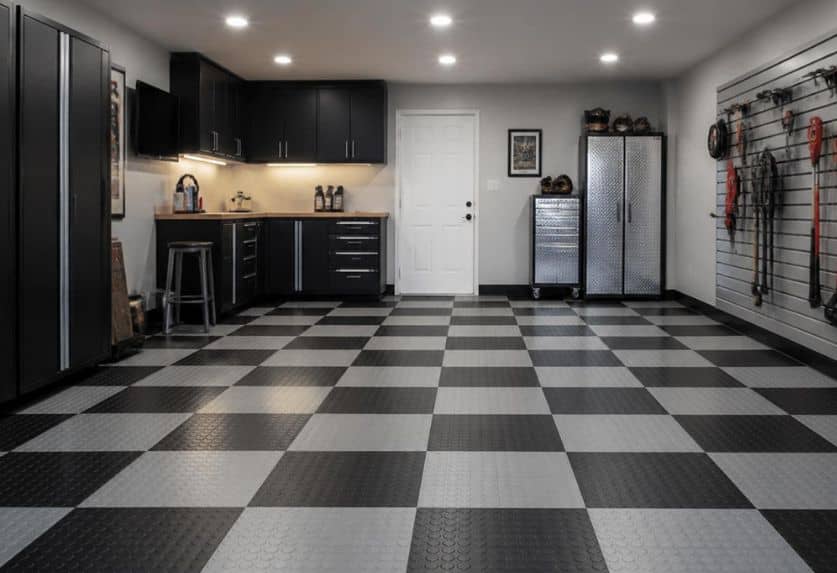
Garage floor tiles are rigid or flexible squares, usually PVC, polypropylene, or rubber, that interlock and lay loose over your existing concrete. There’s no grinding, no adhesive on most systems, and no cure time. You snap them together like a puzzle and walk on them immediately. They come in a range of colors and patterns, and if one tile gets damaged, you can pop it out and replace just that piece.
What Is an Epoxy Flake Coating?
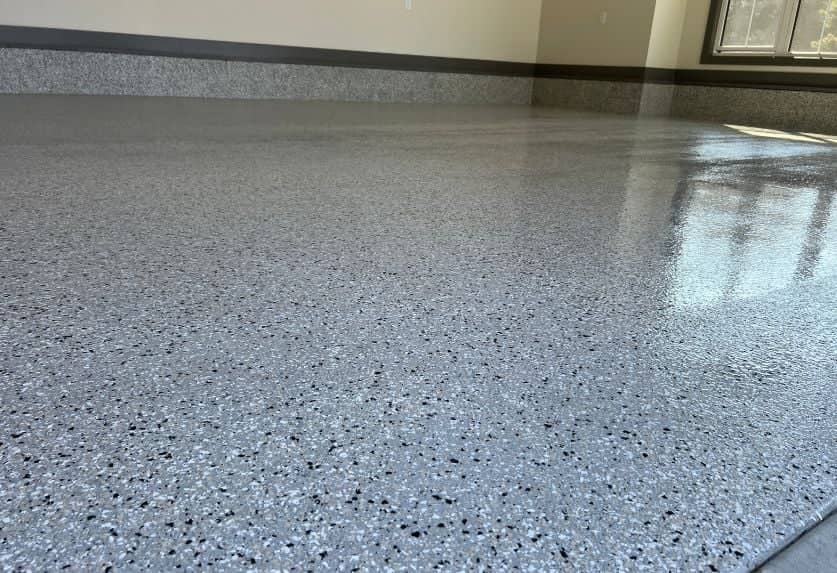
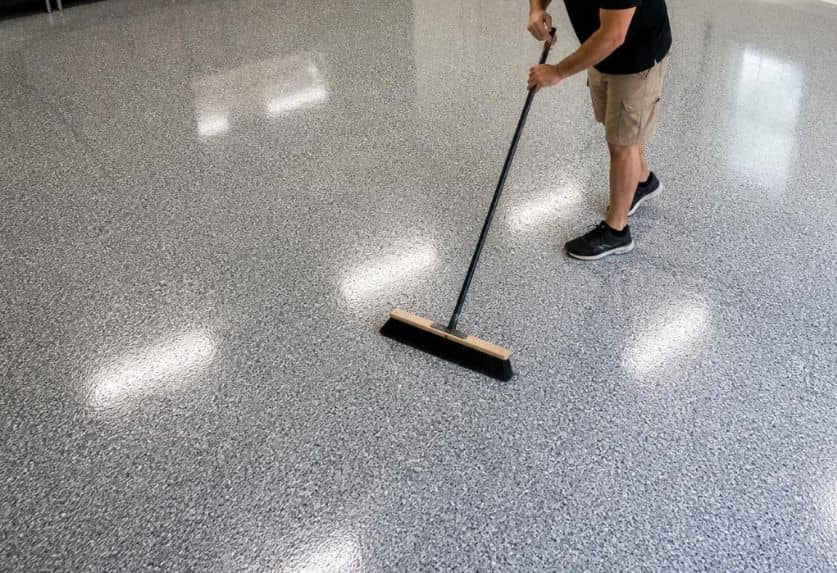
An epoxy flake coating is a multi-layer system chemically bonded to your concrete. The installer mechanically grinds the slab, repairs cracks, applies a base coat, broadcasts decorative flakes into it, and seals everything under a durable topcoat, typically a UV-stable polyaspartic. The result is one continuous, seamless surface with no seams, no gaps, and nothing loose. It becomes part of the floor rather than sitting on top of it.
Head-to-Head Comparison: Garage Epoxy vs. Tiles
Both options have real strengths. The differences show up clearly once you compare them side by side on the things that matter day to day.
Installation and Downtime
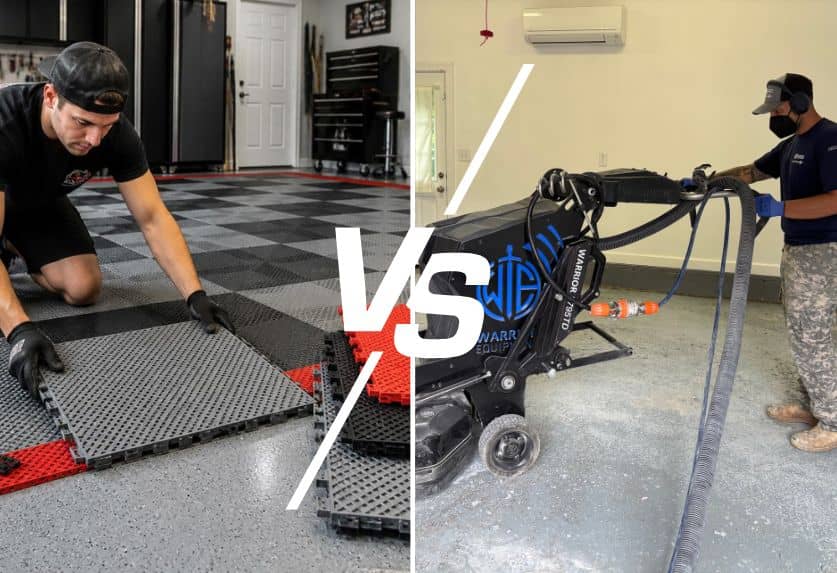
This is where tiles shine. A handy homeowner can lay a tile floor in an afternoon with no special skills or equipment, and use the garage the moment the last tile snaps in. Epoxy is the opposite: it’s a professional job involving diamond grinding, multiple coats, and cure time before you can drive on it, often a day or more depending on the system. If speed and doing it yourself are your top priorities, tiles have the edge.
Durability and Load
Epoxy pulls firmly ahead here. Because it’s chemically bonded to the concrete, it won’t shift, lift, or slide under the weight of a vehicle. Interlocking tiles can shift, separate, or crack under heavy point loads, jack stands, or aggressive turning, and cheaper plastic tiles can warp or fade over time. A quality epoxy floor handles hot tires, dropped tools, and heavy traffic as one solid surface. Both can last 15 to 20 years, but epoxy does it as a bonded system rather than a collection of loose parts.
Appearance and Customization
Tiles offer modular patterns and easy color mixing, and the look is clean if a bit uniform and grid-like, since you’ll always see the seams. Epoxy delivers a seamless, custom, higher-end appearance. With flake blends, you control the exact color scheme, depth, and finish, and there are no lines interrupting the floor. For a showroom or finished-space look, epoxy is hard to beat.
Maintenance and Cleaning
Epoxy forms a sealed, continuous surface, so spills wipe right up and there’s nowhere for oil, dirt, or water to hide. Tiles have seams, and depending on the style, liquids and grit can work down into or between them, which means more effort to keep clean and, in some cases, trapped debris you can’t reach without lifting tiles. For a low-maintenance floor, the seamless surface wins.
Moisture and Spills
Because tiles sit loose on the slab, liquids and moisture can migrate through the seams and get trapped underneath, which can lead to musty odors or hidden buildup that requires disassembling sections to address. A properly installed epoxy floor, applied over correctly prepped and moisture-checked concrete, seals the surface and leaves no gaps for anything to seep under. This is a meaningful advantage in garages that see spills, snowmelt, or washdowns.
Cost and Long-Term Value
Upfront, tiles can be cheaper, roughly $2 to $8 per square foot, especially as a DIY project. Professional epoxy flake systems typically run about $5 to $12 per square foot installed, because you’re paying for proper concrete preparation and skilled application. But value is about the long game. A bonded epoxy floor that lasts 15 to 20 years without shifting, staining, or trapping moisture often delivers more per dollar than tiles you may need to replace or fuss over, especially the cheaper plastic ones. As with anything, the lowest upfront price and the best long-term value aren’t always the same thing.
When Garage Tiles Make Sense Over Epoxy
Tiles are a smart pick in a handful of real scenarios. If you rent and can’t alter the concrete, tiles let you upgrade the floor and take it with you when you move. If you want a genuine weekend DIY project with no contractor, tiles deliver. If you need the space usable immediately with zero downtime, or you want the flexibility to swap out individual sections, tiles do that well. And for lighter-duty garages used mainly as a hobby room, gym, or play area rather than for heavy auto work, tiles can be plenty.
When Epoxy Wins Over Garage Tiles
For the way most people actually use a garage, epoxy is the stronger investment. If you park vehicles, do auto or home projects, deal with oil, chemicals, or hot tires, or simply want a seamless, easy-to-clean floor that looks custom and lasts, a professionally installed epoxy flake system is built for it. It bonds to the slab, resists what a garage throws at it, and gives you a finished, showroom-quality surface with no seams to trip on, stain, or trap moisture. And because it’s an interior floor, it’s the kind of work a quality installer can genuinely stand behind.
The Bottom Line
Garage floor tiles and epoxy both beat bare concrete, but they’re built for different priorities. Choose tiles if you’re renting, want a fast DIY solution, or need a removable floor for light-duty use. Choose epoxy if you want maximum durability, a seamless custom look, easy cleaning, and long-term value in a garage that works for a living.
Not sure which fits your space and how you use it? That’s exactly the conversation we like to have. Reach out to MACH ONE® and we’ll give you an honest recommendation, walk you through real flake color samples, and back your finished garage floor with a warranty, because we grind it, coat it, and seal it right the first time.
Check Out More Great Posts
Epoxy Floor Horror Stories: 7 Nightmares That Could Haunt Your Garage
Peeling, bubbling, yellowing, hot tire pickup, and more: here are seven epoxy floor horror stories, what causes each one, and how to keep them out of your garage.
Read article
Can You Epoxy a Driveway? What Every Homeowner Should Know
Learn what UV, freeze-thaw, and hot tires do to the wrong concrete coating, and which products actually last outside on a driveway.
Read article
Why Is My Epoxy Floor Turning Yellow?
Is your epoxy floor fading to an ugly yellow? It's UV light breaking down the resin, it's permanent, and here's exactly how to prevent it.
Read article