

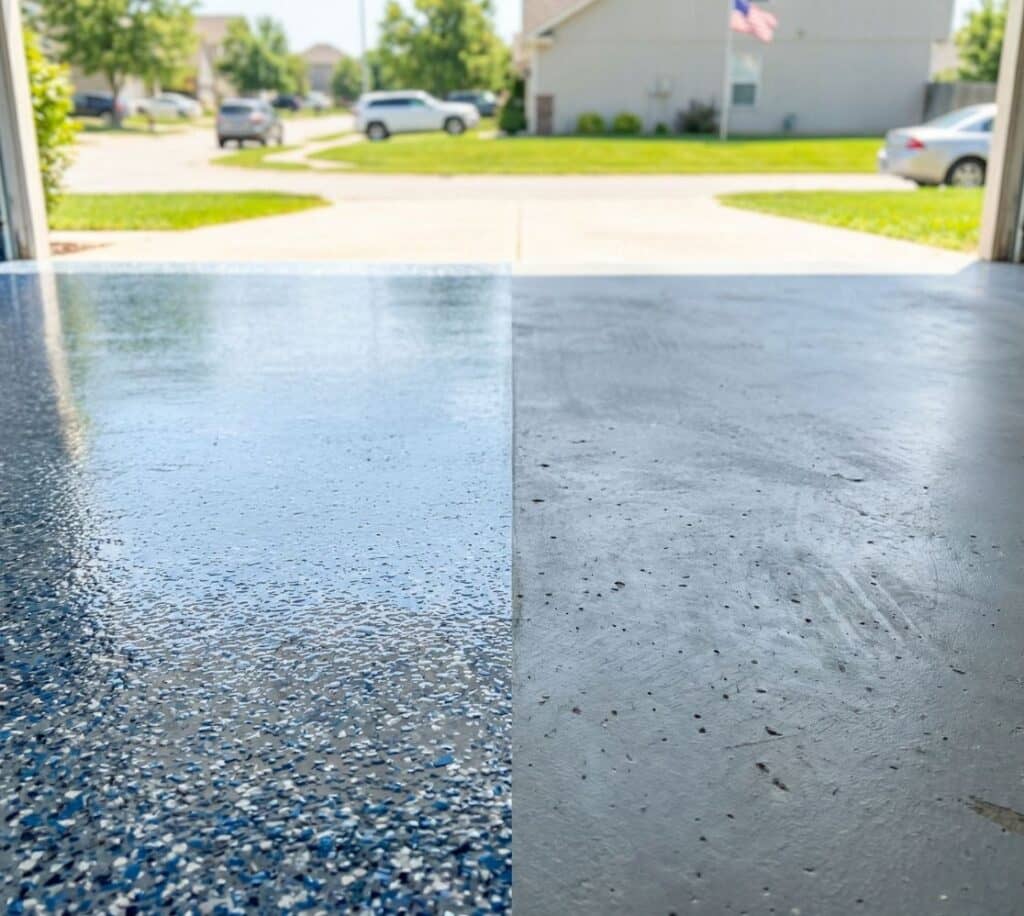
If you’re staring at bare concrete in your garage and are weighing your options, you’ve likely narrowed it down to two contenders: standard concrete paint and high-performance epoxy. While one is a quick weekend fix, the other is a long-term investment in your home’s value. To help you choose the right coating for your garage, we’ve broken down how these two stack up in terms of durability, cost, and grit.
Understanding Garage Floor Treatment Options
Picking a garage floor coating is a bigger deal than most people think. This isn’t just about a fresh color; it’s about how your garage is going to look—and actually work—for the next decade. If you’re ready to stop looking at stained concrete and finally level up, you’ve got to know what you’re getting into.
There’s a world of difference between a quick coat of hardware store paint and a full-blown epoxy system. One is a budget-friendly weekend project that might last a season, and the other is a permanent upgrade. Before you pull the trigger, let’s break down the intel so you can choose the right mission for your home and your wallet.
Concrete paint provides a straightforward, budget-friendly approach to beautifying garage floors. Paint products typically consist of latex acrylic or modified enamel formulations designed to adhere to concrete surfaces and provide basic protection against stains and wear. Paint applications are relatively simple and can be completed by most homeowners with the most basic DIY skills.
Epoxy coatings create a chemical bond with the concrete through a reaction between resin and hardener components. This bonding process produces a thick, durable surface layer that becomes an integral part of the floor rather than simply sitting on top of it. The result is a high-performance coating that offers superior resistance to chemicals, abrasion, and impact compared to traditional paint options.
Understanding these fundamental differences helps homeowners make informed decisions based on their specific garage usage patterns, budget constraints, and long-term expectations for their floor’s performance and appearance. Next, we’ll examine the specifics of epoxy garage floor coatings.
What is Epoxy Garage Floor Coating?
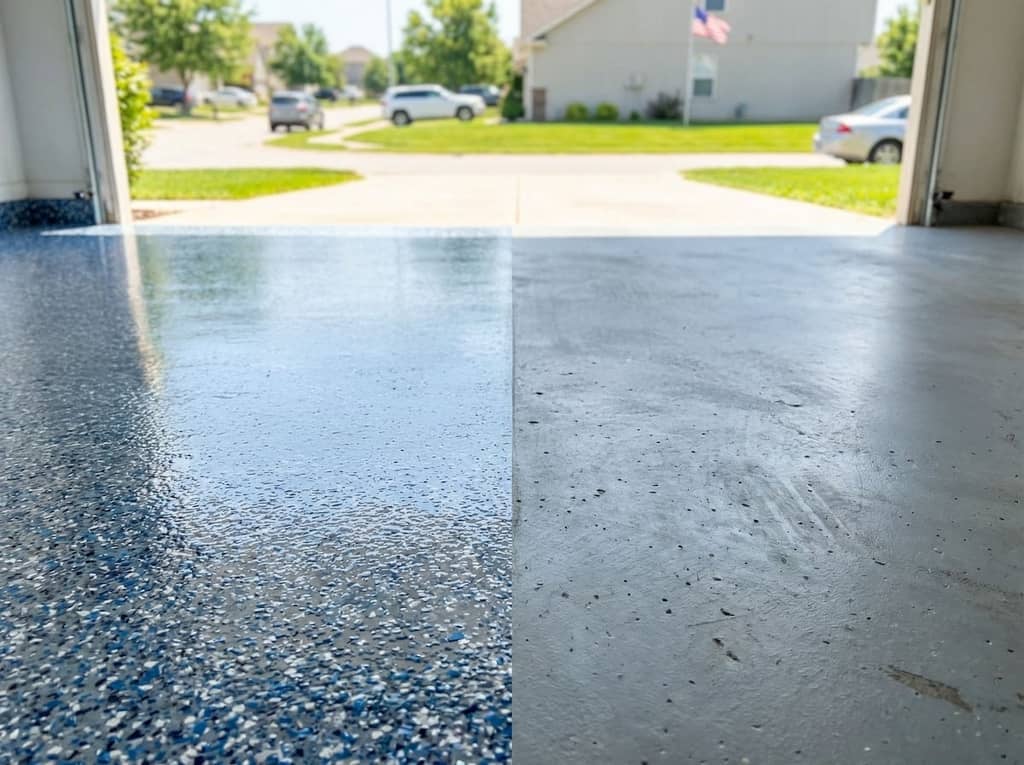
Epoxy coating consists of a two-part system that combines an epoxy resin with a polyamine hardener. When these components are mixed together, they undergo a chemical reaction called curing, which transforms the liquid mixture into a solid, rigid plastic material that bonds directly to the concrete surface at a molecular level. This process is fundamental to providing best garage floor epoxy services.
This chemical bonding process distinguishes epoxy from paint, which relies primarily on mechanical adhesion. The epoxy molecules penetrate into the pores of the concrete, creating an interlocking connection that resists peeling and delamination even under challenging conditions. As the epoxy cures, it forms a thick, seamless layer that typically ranges from 2 to 10 mils in thickness, depending on the application method and number of coats applied.
The resulting surface exhibits exceptional hardness and durability, with properties that far exceed those of conventional paint products. Professional-grade epoxy systems often include multiple layers: a primer coat that enhances adhesion, a colored base coat that provides the primary protection and appearance, and a clear topcoat that adds additional durability and UV resistance. This multi-layer approach creates a comprehensive flooring system designed to withstand decades of use in demanding garage environments, including specialized solid epoxy floor coating services.
Now that we’ve covered epoxy, let’s explore the best paint for garage floor options available.
What is Best Paint for Garage Floors?
Several paint formulations are available for garage floors, each designed to address different performance requirements and budget considerations. Understanding the characteristics of each type helps homeowners select the most appropriate option for their specific situation.
Latex acrylic paint represents the most economical choice for garage floors. These water-based formulations apply easily with standard rollers or brushes and clean up with soap and water, making them accessible to DIY enthusiasts. Their durability is limited, typically lasting only one to two years before requiring reapplication. Harsh automotive chemicals like brake fluid and solvents can soften and discolor latex paint, limiting its suitability for garages where chemical exposure is common.
One-part epoxy enamel paint offers enhanced performance by incorporating a small amount of epoxy resin into a latex acrylic base. This hybrid formulation provides better adhesion to concrete and improved resistance to tire traffic, chemicals, and peeling compared to standard latex paint. While these products cost approximately 20 percent more than basic latex options, they typically deliver three to four years of service when applied to properly prepared surfaces, making them a practical middle-ground solution for garages with moderate use.
It’s important to recognize that one-part epoxy paints differ fundamentally from true two-part epoxy coatings. The former is essentially an enhanced paint product, while the latter involves a chemical reaction that creates a much more durable and resilient surface.
Next, we’ll compare the durability and performance of concrete paint vs epoxy in more detail.
Concrete Paint vs Epoxy: Durability and Performance
The performance gap between concrete paint vs epoxy coatings becomes most apparent when examining how each option withstands the daily challenges of garage environments. These differences directly impact maintenance requirements, longevity, and overall satisfaction with the flooring investment.
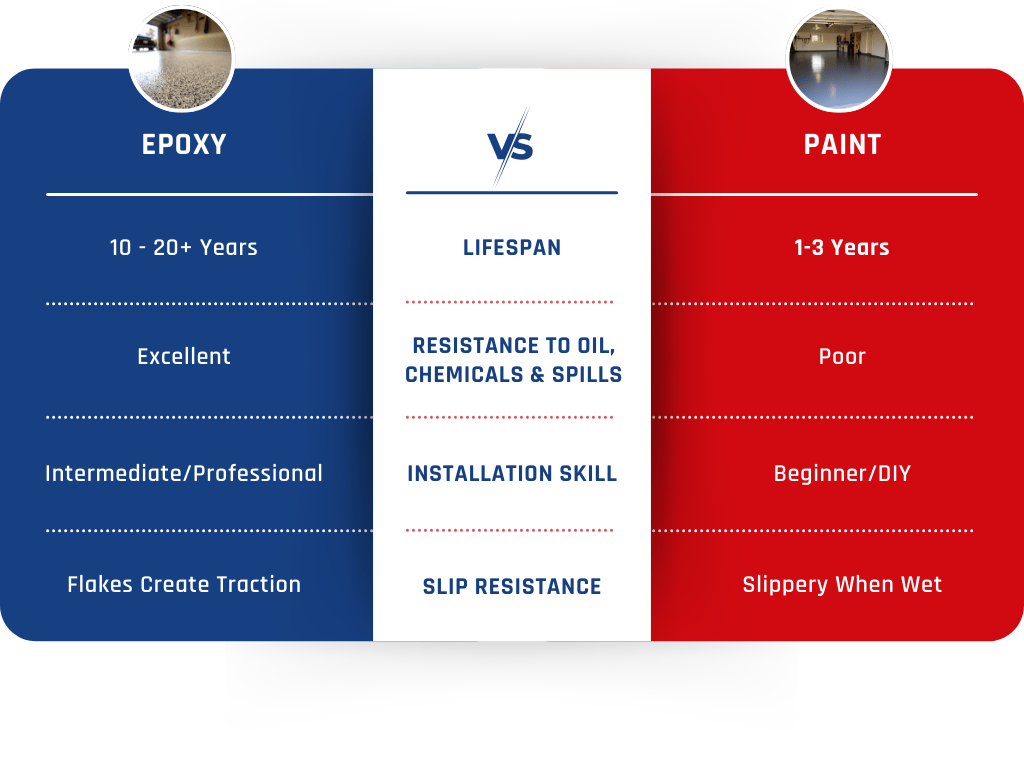
Concrete paint, whether latex acrylic or one-part epoxy enamel, provides a basic protective layer that resists common garage contaminants like motor oil, grease, and gasoline to varying degrees. This protection has limitations. Paint films remain relatively thin and flexible, making them vulnerable to damage from hot tires, which can soften the coating and cause it to peel or lift. High-traffic areas develop worn paths where the paint gradually erodes, exposing the concrete beneath. Chemical resistance, while adequate for occasional spills, diminishes over time as the coating ages and becomes more porous.
Epoxy coatings deliver substantially superior performance across all durability metrics. The thick, rigid surface resists hot tire pickup, maintaining its integrity even when vehicles are parked immediately after highway driving. Chemical resistance is exceptional, with properly formulated epoxy systems withstanding prolonged exposure to automotive fluids, solvents, and cleaning agents without staining or degradation. The coating’s hardness protects against abrasion from dragged equipment, dropped tools, and foot traffic, while its impact resistance prevents chipping and cracking from heavy objects.
This performance advantage translates directly into longevity. While paint typically requires reapplication every two to five years, a professionally installed epoxy coating can last fifteen years or longer with proper maintenance. This extended service life makes epoxy particularly valuable for homeowners seeking a long-term solution that minimizes ongoing maintenance and replacement costs. For garages where oil resistant garage floor paint is a priority, epoxy’s non-porous surface prevents petroleum products from penetrating and staining the floor, maintaining both appearance and cleanliness.
Now that we’ve compared durability, let’s examine the installation process and cure time differences between paint and epoxy.
Installation Process and Cure Time Differences
The application procedures for paint and epoxy differ significantly in complexity, time requirements, and technical demands, factors that influence both DIY feasibility and professional installation costs.
Applying garage floor seal paint follows a relatively straightforward process. After cleaning the concrete surface to remove dirt, oil, and loose material, homeowners can typically apply one or two coats using standard painting equipment. The process resembles painting interior walls, making it accessible to those with basic home improvement skills. Drying times are relatively brief, with most paint products allowing foot traffic within 12 to 24 hours. Vehicle traffic can usually resume after approximately five days, though some products may require slightly longer curing periods for optimal durability.
Epoxy floor and painting demands considerably more preparation and technical precision. The concrete surface must be thoroughly cleaned, and any existing coatings, sealers, or contaminants must be completely removed through grinding or chemical etching. Cracks, spalling, and other defects require repair to ensure proper adhesion and prevent future problems. The epoxy components must be mixed in precise ratios and applied within specific temperature and humidity ranges to achieve proper curing. Most systems require multiple layers applied over several days, with each coat needing adequate curing time before the next application.
The extended timeline for epoxy installation represents a significant consideration. While foot traffic may be possible after 24 to 48 hours, full curing typically requires six to seven days before the floor can safely support vehicle weight. Some high-performance systems may need even longer curing periods to achieve their maximum hardness and chemical resistance. This extended downtime requires careful planning to ensure garage access during the installation period.
With installation covered, let’s move on to a cost comparison of paint versus epoxy garage floor coatings.
Cost Comparison: Paint vs Epoxy Garage Floor Coating
Financial considerations play a central role in flooring decisions, with both immediate expenses and long-term value requiring careful evaluation to determine the most economical choice for your specific situation.
Paint represents the most affordable option for garage floor protection, with material costs typically ranging from one to three dollars per square foot. Basic latex acrylic products occupy the lower end of this range, while one-part epoxy enamel paints command slightly higher prices due to their enhanced durability. These costs include only the paint itself, with additional expenses for pressure washing, primers, sealers, and application supplies adding to the total investment. For a standard two-car garage of approximately 400 square feet, total material costs might range from $400 to $1,200, depending on product selection, surface preparation requirements, and DIY vs. professional painter.
Epoxy garage floor coating involves substantially higher upfront investment, with costs ranging from four to twelve dollars per square foot or more for premium systems. This price variation reflects differences in product quality, system complexity, and whether installation is DIY or professional. A professionally installed epoxy system for a 400-square-foot garage might cost between $1,600 and $4,800 or higher, including surface preparation, materials, and labor. DIY epoxy kits reduce costs but require significant time investment and careful attention to application procedures to achieve satisfactory results.
Evaluating these options solely on initial cost overlooks the critical factor of longevity. Paint’s shorter lifespan means homeowners face reapplication expenses every two to five years, with each recoating cycle requiring surface preparation, materials, and labor. Over a fifteen-year period, paint might require three to seven reapplications, potentially exceeding the cost of a single epoxy installation. Epoxy’s extended service life of fifteen years or more means the higher initial investment is spread across many more years of use, often resulting in lower annualized costs and better long-term value for homeowners planning to remain in their homes.
Beyond cost, maintenance and aesthetic considerations also play a significant role. Let’s explore these factors next.
Maintenance and Aesthetic Considerations
The ongoing care requirements and visual appeal of garage floor coatings significantly impact daily satisfaction and the overall value derived from your flooring investment.
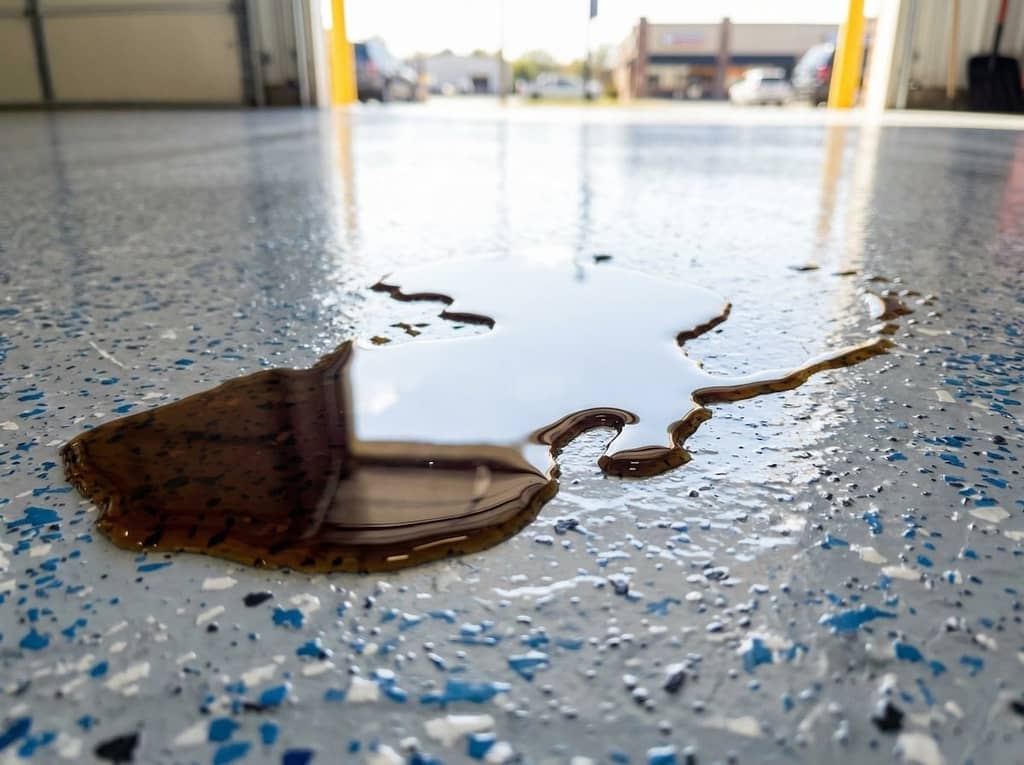
Epoxy cement floor paint excels in ease of maintenance due to their seamless, non-porous surface characteristics. Spilled automotive fluids, including motor oil, antifreeze, and gasoline, can be wiped away without leaving permanent stains, as the coating prevents liquids from penetrating into the concrete substrate. Routine cleaning typically requires only sweeping to remove loose debris and occasional mopping with mild detergent and water. The high-gloss finish naturally resists dirt accumulation and simplifies removal of tracked-in mud, leaves, and other materials. Epoxy’s resistance to mold and mildew growth proves advantageous in humid garage environments or areas with limited ventilation, reducing health concerns and unpleasant odors.
Garage floor seal paint presents more demanding maintenance challenges due to its porous nature and thinner coating thickness. Oils, chemicals, and moisture can seep into the paint film, creating stubborn stains that resist standard cleaning efforts. Spills must be addressed immediately to prevent permanent discoloration, requiring vigilance and prompt action. Painted surfaces often require more frequent cleaning with potentially harsher chemicals to maintain appearance, which can accelerate coating degradation and necessitate earlier reapplication. Touch-ups become necessary as paint chips, peels, or wears away in high-traffic zones, creating an ongoing maintenance cycle that demands both time and expense.
From an aesthetic perspective, epoxy delivers superior visual appeal and customization possibilities. The high-gloss finish creates a sleek, professional appearance that reflects light throughout the garage, brightening the space and making it appear larger and cleaner. Epoxy coatings are available in an extensive range of colors, and decorative elements such as color flakes, metallic pigments, or quartz aggregates can be incorporated to create unique, personalized designs. This lustrous finish maintains its appearance over years of use, resisting fading from UV exposure and discoloration from chemical contact.
Paint provides a more basic aesthetic outcome. While it initially delivers a fresh, clean look and comes in various colors, the finish typically appears matte or semi-gloss rather than the lustrous sheen characteristic of epoxy. The visual appeal deteriorates relatively quickly as paint fades, particularly when exposed to sunlight entering through garage doors. Discoloration from automotive fluids becomes increasingly apparent, and worn areas develop a dull, aged appearance that diminishes the overall look of the space.
Given these factors, you’re probably wondering, “Should I epoxy my garage floor?” Let’s explore that next.
Should I epoxy my garage floor? Making the right choice
Determining whether epoxy coating is the right choice for your garage floor requires careful consideration of multiple factors that align with your specific needs, usage patterns, and long-term goals for the space. For a comprehensive understanding, it’s beneficial to weigh the advantages and disadvantages of epoxy flooring.
Epoxy coatings are particularly well-suited for homeowners who use their garages intensively. If your garage serves as a workshop, home gym, or multi-purpose space in addition to vehicle storage, epoxy’s durability and easy maintenance make it an excellent investment. The coating withstands heavy foot traffic, dropped tools, dragged equipment, and chemical spills without showing significant wear, maintaining both functionality and appearance over many years of demanding use.
Budget considerations extend beyond initial cost to include long-term value. While epoxy requires a larger upfront investment, its extended lifespan of fifteen years or more means you avoid the recurring expenses associated with repainting every few years. For homeowners planning to remain in their homes long-term, this longevity often results in lower total cost of ownership compared to paint, despite the higher initial price. The professional appearance and durability of epoxy can enhance property value, potentially providing return on investment if you eventually sell your home.
Climate and environmental factors also influence the decision. Garages in humid regions benefit from epoxy’s moisture resistance and mold prevention properties. Areas with extreme temperature fluctuations favor epoxy’s stability and resistance to thermal cycling. If your garage experiences frequent chemical exposure from automotive maintenance, lawn care products, or workshop activities, epoxy’s superior chemical resistance provides essential protection.
For homeowners seeking alternatives, it’s worth noting that while some newer coating technologies exist, few offer the proven track record and comprehensive performance characteristics of quality epoxy systems. Paint remains a viable option for light-use garages or temporary solutions, but for most homeowners seeking a permanent, high-performance floor coating, epoxy represents the gold standard in garage flooring.
The decision ultimately depends on balancing your priorities. If you value durability, low maintenance, professional appearance, and long-term value, are epoxy garage floors worth it, epoxy is likely worth the investment. If budget constraints are paramount and your garage sees minimal use, paint may suffice as a more economical alternative.
Finally, let’s summarize the best applications for each garage floor treatment to help solidify your decision.
Best Applications for Each Garage Floor Treatment
Selecting the optimal garage floor treatment requires matching the coating’s characteristics to your specific usage patterns, environmental conditions, and performance expectations.
Paint works best in scenarios where garage use is light to moderate and budget constraints are significant. If your garage primarily serves as storage space for seasonal items, lawn equipment, and occasional vehicle parking, paint can provide adequate protection and aesthetic improvement without the higher cost of epoxy. Garages in rental properties or homes where you plan to relocate within a few years may also favor paint’s lower initial investment. Garages with minimal chemical exposure and limited foot traffic can achieve satisfactory results with quality paint products, particularly one-part epoxy enamel formulations that offer enhanced durability compared to basic latex options.
Epoxy garage floor coating excels in high-demand applications where durability and performance are paramount. Workshops where tools, equipment, and materials are frequently moved across the floor benefit from epoxy’s abrasion resistance and impact protection. Multi-car garages housing valuable vehicles deserve the superior protection and professional appearance that epoxy provides. Home gyms require the durability to withstand dropped weights and exercise equipment without damage. Garages in humid climates gain significant advantages from epoxy’s moisture barrier properties, which prevent water infiltration and protect the concrete substrate from freeze-thaw damage.
Environmental factors also guide the selection process. Garages with poor ventilation or limited climate control benefit from epoxy’s resistance to mold, mildew, and moisture-related deterioration. Spaces exposed to direct sunlight through windows or glass doors favor epoxy’s UV resistance and color stability. Garages where temperature extremes are common require epoxy’s thermal stability to prevent coating failure from expansion and contraction cycles.
For homeowners that use their garage as an extension of their living space, epoxy’s aesthetic qualities and customization options create an environment that complements the home’s interior design. The professional finish elevates the space, making it suitable for entertaining, hobbies, or other activities beyond vehicle storage.
Making the Right Call for Your Garage Floor
Ultimately, the choice between epoxy vs paint garage floor hinges on aligning your specific needs with the coating’s attributes. Prioritize durability and longevity with epoxy for high-use garages, or opt for paint in low-traffic areas where budget is a primary concern. Consider environmental factors like humidity and temperature fluctuations, which can impact the performance of both coatings. By carefully weighing these considerations, you can select the ideal treatment that enhances your garage’s functionality and appearance for years to come.
If you decide that epoxy is the right choice for your space, be sure to find a MACH ONE® Epoxy Floors near you! Our trained epoxy professionals are experts in garage floor coatings and can walk you through the color options, flake sizes, and process.
Check Out More Great Posts
Epoxy Floor Horror Stories: 7 Nightmares That Could Haunt Your Garage
Peeling, bubbling, yellowing, hot tire pickup, and more: here are seven epoxy floor horror stories, what causes each one, and how to keep them out of your garage.
Read article
Can You Epoxy a Driveway? What Every Homeowner Should Know
Learn what UV, freeze-thaw, and hot tires do to the wrong concrete coating, and which products actually last outside on a driveway.
Read article
Why Is My Epoxy Floor Turning Yellow?
Is your epoxy floor fading to an ugly yellow? It's UV light breaking down the resin, it's permanent, and here's exactly how to prevent it.
Read article